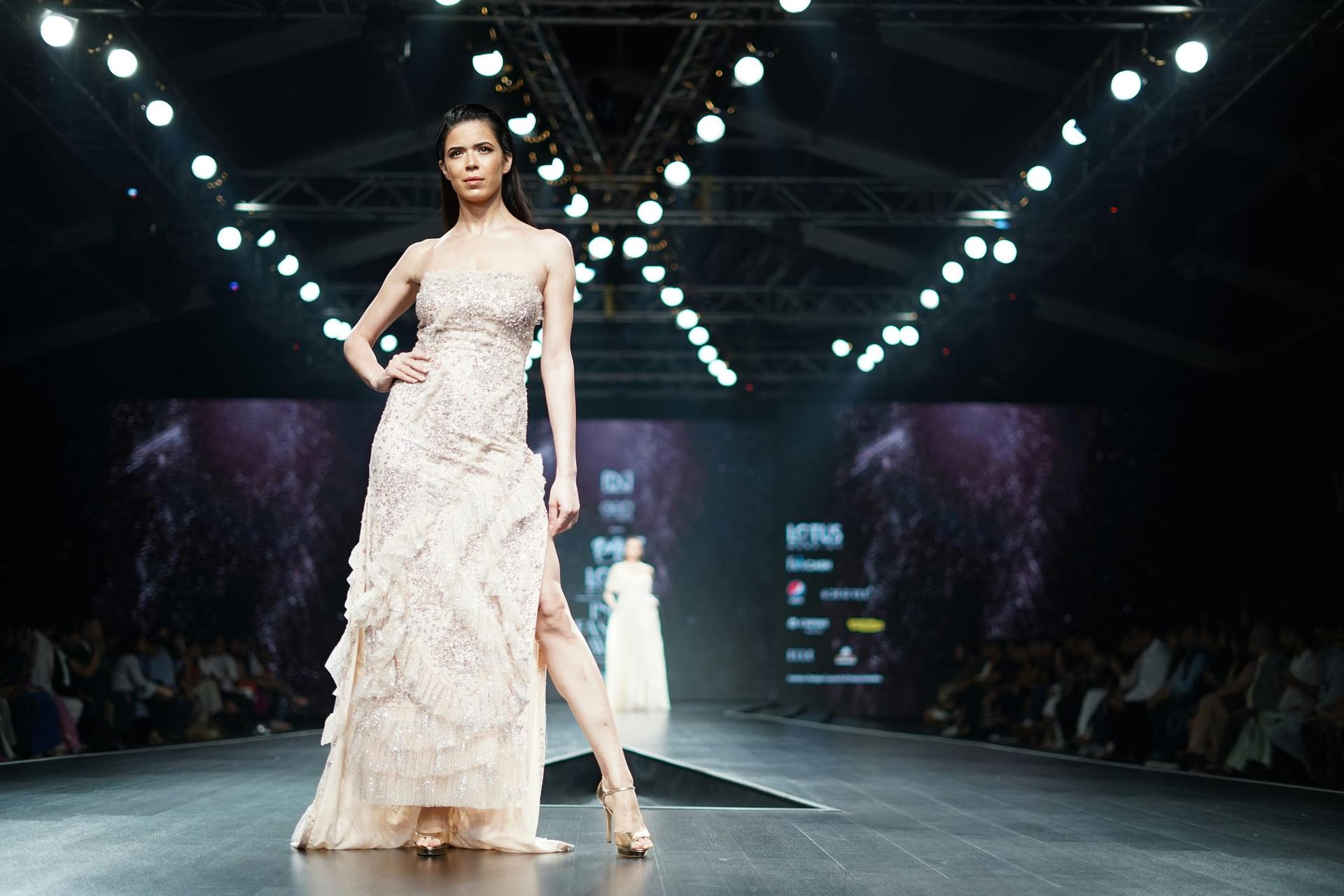
Fashion Week looks more accessible than ever. The biggest shows are still closed, though. What opened to the public was a separate industry selling not access itself, but a convincing imitation of it.
Search Eventbrite for the name of any major city followed by Fashion Week. Within seconds, you will find tickets, VIP packages, after-parties, and promises of a front-row seat. Some cost hundreds of dollars.
It feels as if an industry built on invitation lists has finally opened its doors. Now try finding a ticket to Dior, Prada, or Louis Vuitton. You can buy admission to a show taking place during Fashion Week. You cannot buy your way into the part of Fashion Week the entire system was originally built around.
Several very different products now share the same name: invitation-only shows staged by major houses, official programs for the public, independent runways, and commercial events designed primarily to sell tickets. From the outside, they can look almost identical. They exist for very different reasons.
Fashion Week did not become open. It split into a closed original and a public market of alternative versions. For readers who want the practical map of that public layer, how professionals enter Fashion Week without a house invitation is the companion piece.
Exclusivity was part of the product
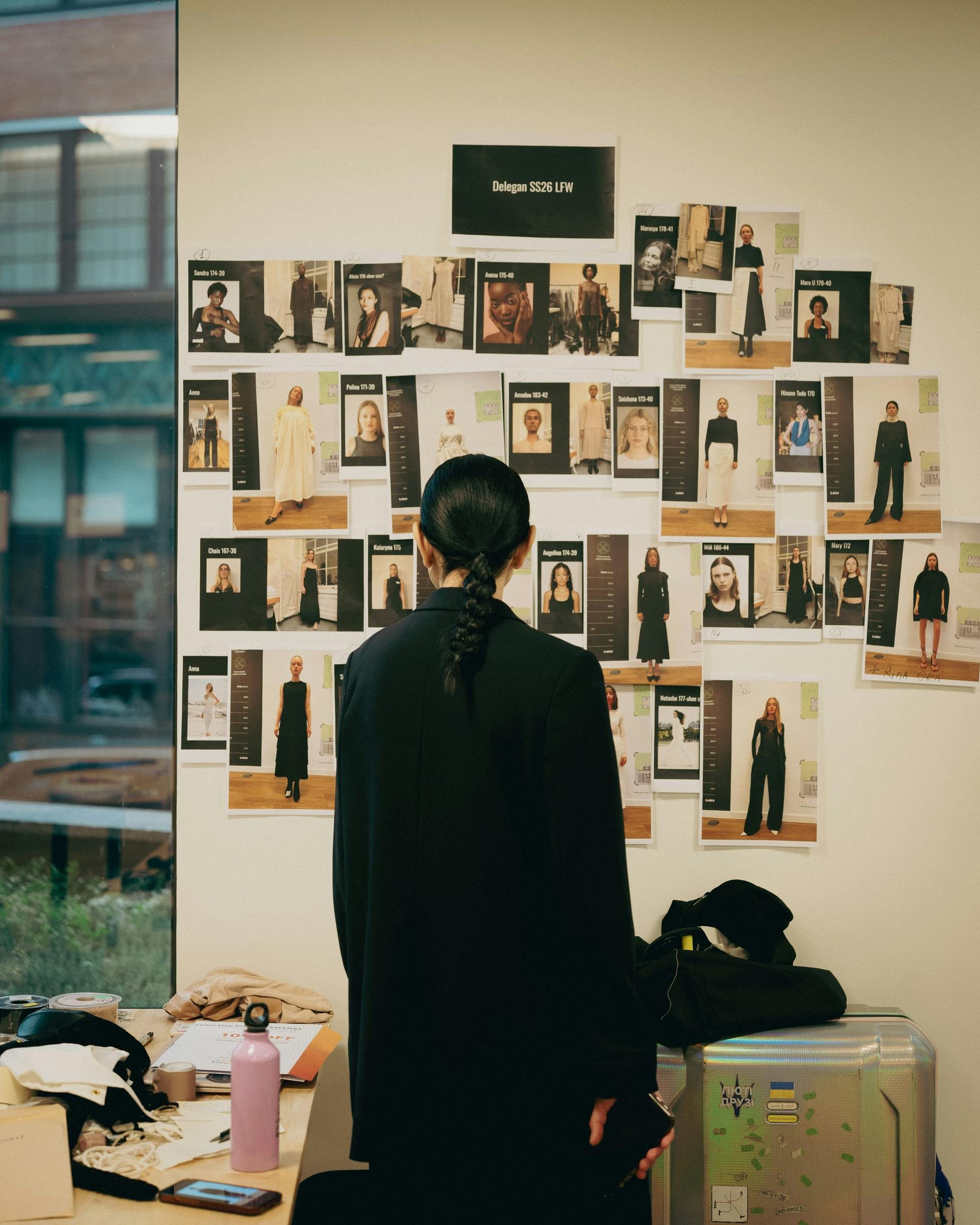
The earliest fashion shows were never intended for the public. Parisian houses presented collections to private clients, and later to buyers and editors. Buyers decided what would reach department stores. Editors decided what everyone else would see in magazines months later.
In 1943, Eleanor Lambert organized Press Week in New York, an early predecessor to New York Fashion Week. With the war preventing American journalists from traveling to Paris, the event gave American designers their own platform and direct access to the press. It was not entertainment for fashion fans. It was working infrastructure: collections were shown to people who could turn them into orders, coverage, and reputation.
An invitation therefore meant more than permission to see the clothes. It revealed where someone stood inside the industry.
Who sat in the first row? Who sat in the second? Who stood against the wall, went backstage, or waited at the entrance while the PR team decided whether there was room? The seating plan turned a professional hierarchy into a physical map visible to everyone in the room.
The collection appeared on the runway. The hierarchy appeared in the audience.
Exclusivity was not an unfortunate side effect of Fashion Week. It was part of the product. Limited access concentrated the right people in one room and made the invitation itself a sign of influence. The old club was not democratic, but at least it never pretended to be.
When the clothes were no longer enough
Eventually, showing a collection was not enough. To win press coverage and remain in cultural memory, a brand had to create an event no one could confuse with anyone else's.
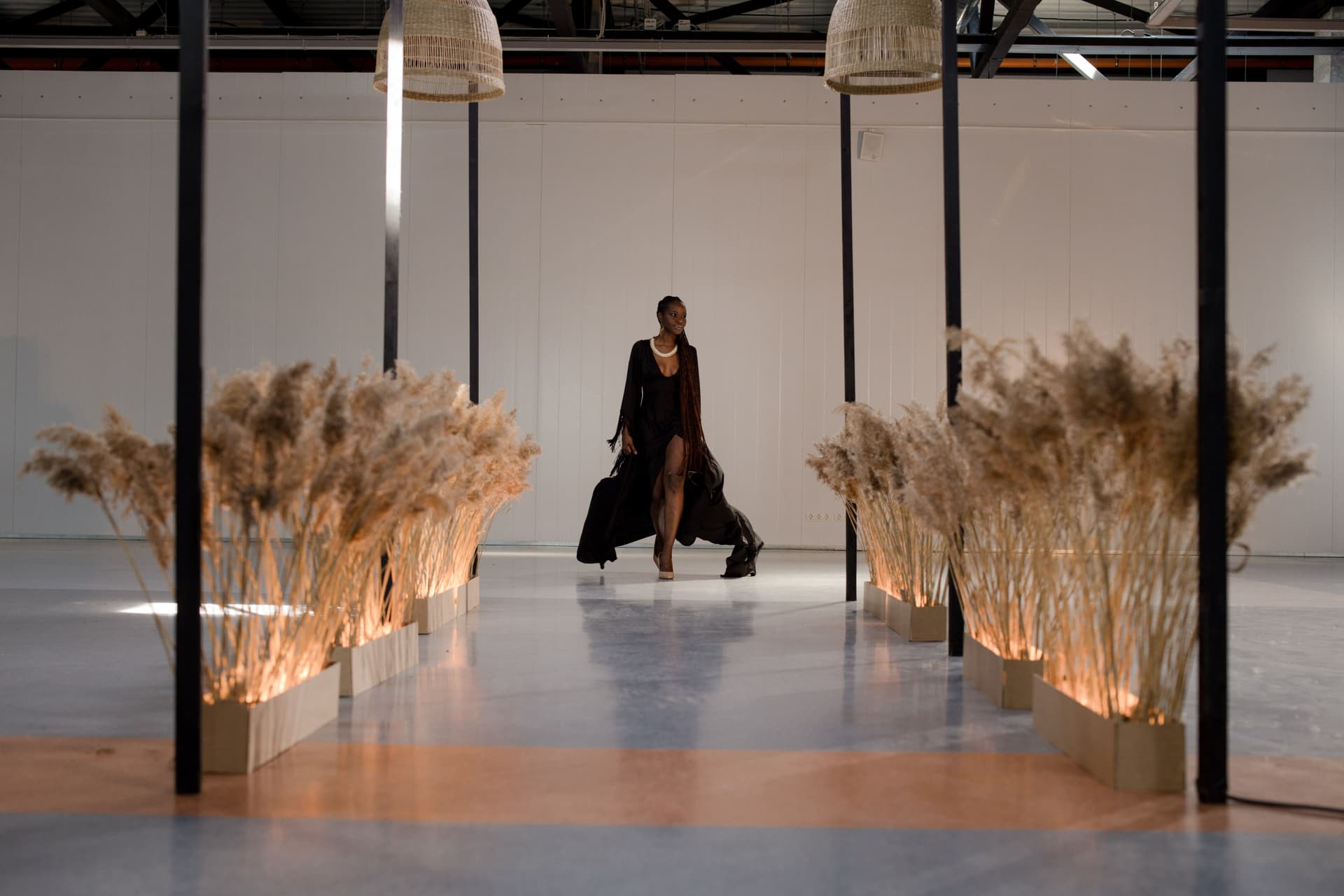
At the finale of Alexander McQueen's No. 13 in 1999, two industrial robots sprayed black and yellow paint across Shalom Harlow's white dress. In 2007, Fendi staged a show on the Great Wall of China. In 2012, a full-size locomotive rolled into the courtyard of the Louvre for Louis Vuitton, pulling a passenger car filled with models.
Under Karl Lagerfeld, Chanel turned the Grand Palais into a stage for increasingly extravagant productions. It became a supermarket stocked with Chanel-branded goods, an airport, a beach, a cruise terminal, and a rocket launch site, complete with a rocket rising above the audience to Rocket Man.
Brands were no longer competing through clothes alone. They competed for the ability to occupy a palace, museum, landmark, or piece of a city for one night.
A fashion show became proof of how much space, money, and attention a house could command for twenty minutes. Yet its economic logic still began inside the venue: impress buyers, secure coverage, strengthen relationships with clients, and confirm the brand's position within the industry.
The next transformation did not change the set. It changed the customer.
The show found a new customer
In the old wholesale model, a brand presented its collection to a few hundred professionals because those people controlled access to the market. A buyer chose what appeared in a department store. An editor chose what appeared in a magazine. Fashion Week was designed around the intermediaries standing between a house and its customers.
As brands expanded their own stores, e-commerce, and direct sales, they also had to speak directly to millions of consumers. Digital platforms and social media changed how people discover trends and shop for fashion. A show could no longer address only the industry. It also had to create desire among people far beyond the room.
That reach matters especially to large luxury houses, whose business extends far beyond the clothes shown on the runway. A viewer may never buy a couture dress, but could buy a handbag, sneakers, perfume, or lipstick—or a silhouette that began as warehouse workwear and ended as a luxury staple. The further a show travels across screens, the more people enter the brand's commercial world through a more attainable product.
In October 2009, Alexander McQueen's Plato's Atlantis became the first fashion show streamed live online. When Lady Gaga directed her fans to SHOWstudio, the audience overwhelmed the site. The technical failure announced a new reality: the audience for a fashion show no longer fit inside the venue.
Instagram, YouTube, TikTok, and the brands' own livestreams followed. A person in the front row became both a guest and a distribution channel. A celebrity generated headlines. An influencer delivered reach. An ambassador connected the house to a particular audience. A creator posting short videos could circulate the collection before an editor had time to write a review.
The runway show became an extraordinarily expensive advertising shoot happening in real time. Twenty minutes on-site had to produce photographs, videos, memes, headlines, and weeks of social reach. The clothes remained the product on the runway. Attention became the product of the show.
The most important viewer was no longer necessarily the buyer sitting across from the runway. It could be a customer holding a phone on another continent.
Fashion Week became visible to everyone, but getting into the room did not become easier. The same few hundred seats were now contested by editors, buyers, and major clients alongside actors, musicians, influencers, ambassadors, sponsors, and friends of the brand. The audience grew into the millions. The front row at Dior or Prada did not gain a single inch.
The screen opened the show. The venue remained closed.

A new market grew outside the club
Millions of people saw Fashion Week and wanted to experience it in person. That created an obvious market. If they could not buy admission to the main show, they could be sold an event that looked close enough.
In 2019, London Fashion Week became the first of the “Big Four” to announce dedicated sessions for the public. For the February 2020 program, a standard ticket cost £135 and a VIP ticket cost £245. The package included selected designer shows, panel discussions, exhibitions, and spaces connecting fashion, art, and technology.
This was a legitimate British Fashion Council product. It did not, however, grant access to Burberry, Victoria Beckham, or the other invitation-only shows on the schedule. The public was offered an official version of LFW assembled specifically for a different audience.
That is where the confusion begins. Fashion Week no longer describes one kind of event. It has become an umbrella brand under which very different experiences can be sold.
Four tickets, four different products
Real offers tell us more than abstract claims about an “open” Fashion Week.
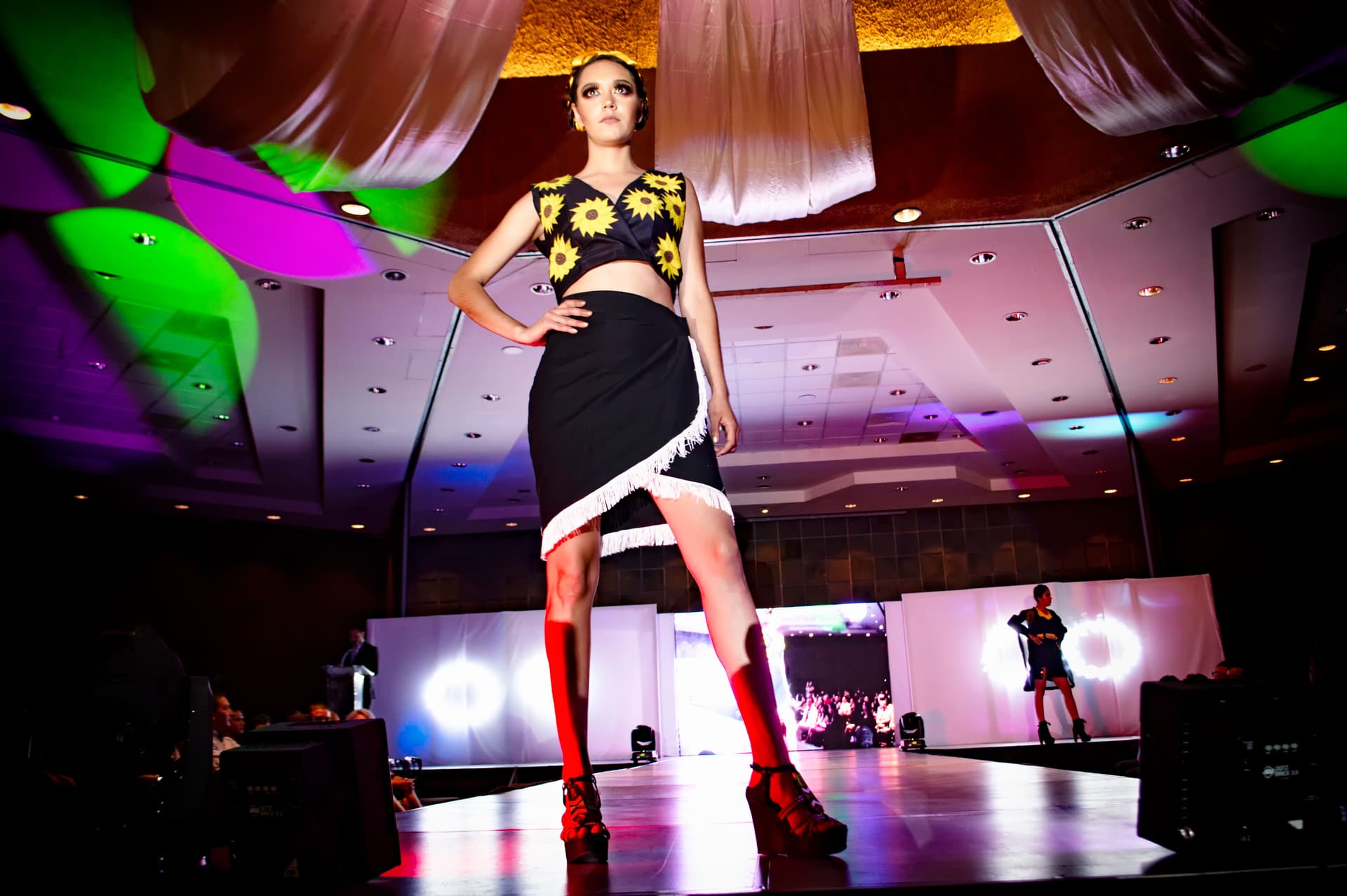
Runway 7 in New York sells an almost theater-style range of ticket tiers. For its February 2026 shows at Sony Hall, standing admission started at $150, assigned seats ranged from $199 to $599, and a VIP table reached $650. Customers chose not just a show but their own position within its visible hierarchy. The front row became a product in the most literal sense.
London Fashion Week's public sessions offered a different kind of legitimacy because the British Fashion Council produced them. The £135 and £245 tickets covered a dedicated public program, not the closed schedule of the largest houses. It was an official part of Fashion Week built for another audience.
The Indigenous Fashion Arts Festival in Toronto uses the runway for a different purpose. Admission to some talks and gatherings was free, while runway tickets cost CAD 40–60. Here, the show provides a platform for Indigenous designers, craft, community, and cultural authorship. The VIP package is not the story.
SWAIA Native Fashion Week in Santa Fe is a distinct fashion week for Indigenous designers in the United States. Its program centers on curated shows and designers' stories. It has its own history, audience, and reason to exist; it is not a bargain version of Paris.
All four can appear in an ad as a chance to “attend Fashion Week.” In practice, Runway 7 sells seats to a commercial runway event. London Fashion Week offers an official public program. IFA and SWAIA use the format to advance cultural representation and support designers the traditional system overlooked for decades.
Price alone tells you almost nothing. An inexpensive show is not necessarily second-rate, and an expensive one is not necessarily important to the industry. Selling tickets does not make an event fake. The useful question is what the event treats as its main product: the designers and their collections, a public cultural program, or the audience's feeling of belonging.
The ticket is not the difference
A major brand's runway show is a marketing and sales expense. The house pays for the venue, production, models, and guests to sell its collection, reinforce its image, and generate attention for future launches. Ticket sales are not part of the revenue model; usually, there are no tickets for sale at all.
An event built mainly around admission works in the opposite direction. Fashion becomes the device used to sell a seat, a VIP package, drinks, an after-party, and a photograph against the right backdrop.
A brand show exists to sell fashion. Its commercial imitation uses fashion to sell tickets.
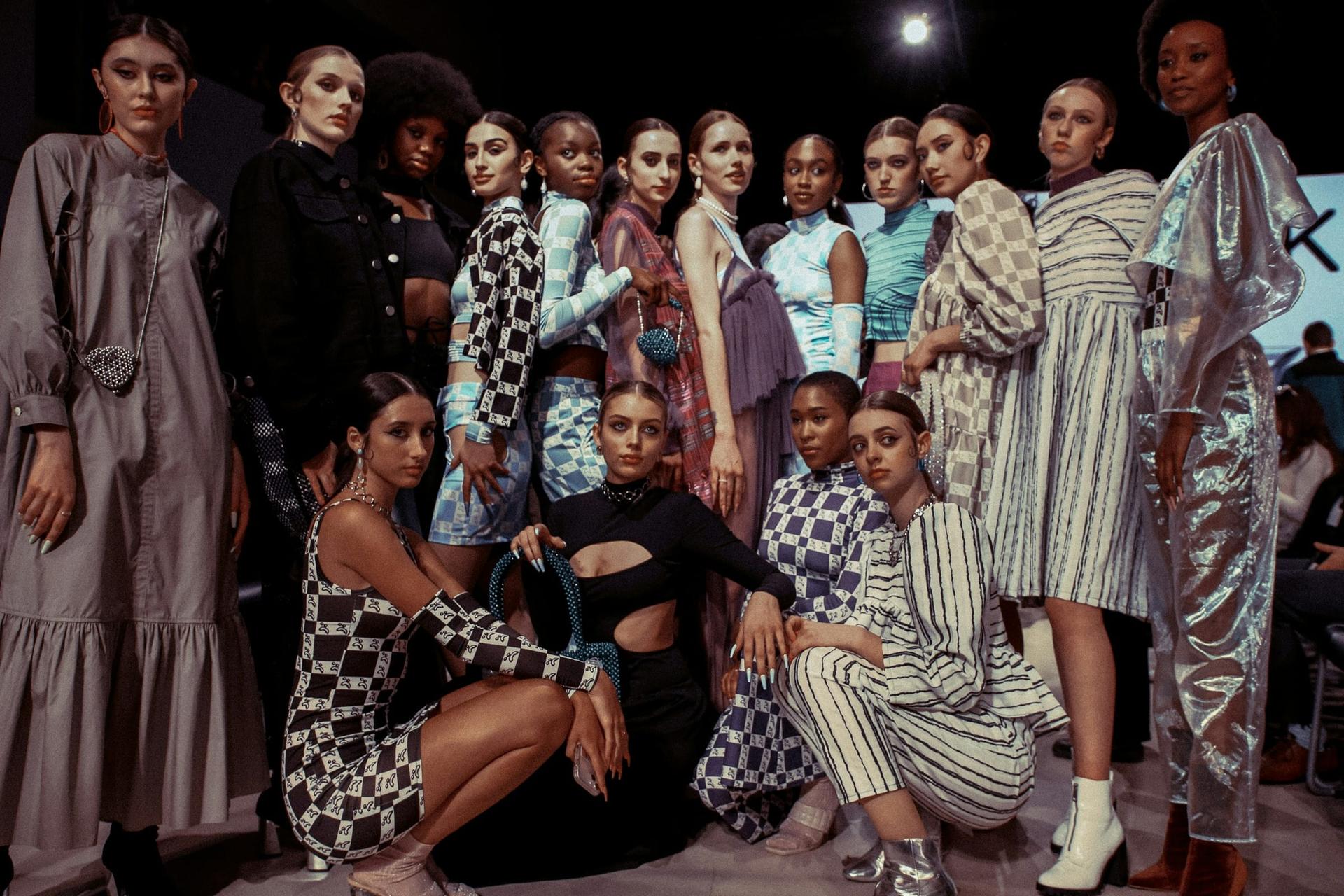
That does not make every paid or independent show an imitation. A shared runway may give young designers their only realistic access to press and buyers. A public program may offer more substance than a closed brand presentation. An independent cultural fashion week can correct the blind spots of the mainstream industry and give overlooked designers a serious platform.
The problem starts when the audience is never told what it is actually buying. A credible independent event will usually name its designers, explain the collections, identify its curators and professional partners, and state a clear purpose: attracting press, reaching buyers, finding customers, or supporting a particular community. In the marketing for a commercial imitation, the emphasis shifts to VIP, front row, red carpet, and after-party. The designers and their work receive little explanation.
No single sign proves anything. But when an event carefully sells the audience's status and barely describes the people making the clothes, the product is probably not fashion. It is proximity to fashion.
Who gets the 300 seats
There is no need to frame the exclusivity of major shows as a moral failure. The room has a fixed capacity, and every seat is expected to serve the event. A buyer might place an order. An editor might publish a review. A celebrity can create a news story. An influencer brings an audience, while a top client demonstrates the commercial value of the relationship.
Working for a fashion company does not automatically earn someone a seat. A software developer, accountant, or e-commerce photographer may be essential to the business every day yet bring no additional value to these particular twenty minutes. This is not a malfunction. It is how a scarce marketing resource is allocated—and it is exactly what a data engineer discovers once luxury turns out to be the storefront.
A friend of mine photographs clothes for the website of a major fashion house. He once asked to attend his own employer's show, even if only in the standing section. The answer was no: the remaining spaces were needed for press, VIP clients, and celebrities. The story does not prove that the brand treats its employees badly. It shows that daily work inside a company and a place in the audience at its most visible marketing event are unrelated forms of value.
This is exactly why the language of openness is misleading. Brands opened their livestreams and content because they needed a mass consumer audience. They did not open the physical room because its scarcity, and the precise composition of its guest list, still serve the marketing strategy.
Fashion Week opened to everyone as media. It did not open to everyone as a place.
The front row as a pricing tier
The industry often describes this shift as democratization. Genuine democratization, however, would redistribute more than the ability to watch. It would also change access to the people, decisions, and influence inside the system.
That is not what happened. The major shows kept control of their guest lists. Around them grew public programs, city festivals, independent runways, and commercial ticketed events. A mass audience received a safe, controlled way to approach the industry without entering the rooms where attention, contracts, and status are still allocated. Behind the most closed rooms, the beautiful violence of couture labor is what often pays for the perfection the audience is invited to witness.
Selling the front row did not erase the old hierarchy. It recreated that hierarchy inside a product for the public. A customer can choose general admission, VIP, or a front-row seat and spend a few hours in a more expensive version of proximity to a closed world.
The front row used to signal influence. In the public version, it became a pricing tier.
Paradoxically, the market for accessible shows may help the real shows remain exclusive. It absorbs demand. People get the runway, the champagne, the QR code, and the photographs without competing for one of the 300 seats a house wants to give its clients, ambassadors, and media partners.
The private club never disappeared. A gift shop simply opened outside its door.
The business of “almost”
The old question was, “How do I get in?” A better question now is, “Where exactly am I being invited, and what exactly am I being sold?”
You can buy a ticket to an event with a runway during Fashion Week. You can sit in the front row, film the models, attend an after-party, and go home with photographs that make a closed world look newly accessible.
But the number of cameras, the lighting, and the word VIP on the ticket cannot answer the only question that matters. Is this a place where fashion presents itself to the industry, or a place where an image of the industry is presented to you?
Fashion Week never stopped being a private club. The real club still exists, with its lists, relationships, service entrances, and people who will never appear on a ticketing page. The more people want to approach it, the more carefully it protects its limited seats.
The door did not open. A box office opened in front of it.
It does not sell influence or belonging. It sells a convincing imitation of both.
Almost inside the industry.
Almost in the front row.
Almost one of them.
And that almost has become Fashion Week's newest business model.