
A young Moroccan man stands on the banks of the Seine, exchanging a small package for a handful of banknotes. The transaction takes only a few seconds. He pulls his hood lower and disappears into the evening crowd.
The police are looking for a face. Everyone else notices only the hoodie.
Later that day, another man steps out of a black Range Rover wearing almost exactly the same thing. His hoodie costs more than most people's monthly rent. Cameras follow him as he walks toward a technology conference where thousands have gathered to hear him speak.
The hood no longer signals danger. It signals power.
The same garment. Two entirely different stories.
Over the past ninety years, the hoodie has been a worker's uniform, a boxer's warm-up layer, a symbol of urban crime, the unofficial dress code of Silicon Valley, and the fashion industry's most coveted product. Few garments have crossed so many social boundaries—or accumulated so many conflicting meanings.
What's remarkable is that none of this was intentional.
The hoodie was never supposed to become a cultural icon.
It wasn't even designed for the street.
Long before it became associated with technology founders or luxury fashion, the hoodie was simply a practical solution to a practical problem.
In the early 1930s, Champion began producing hooded sweatshirts for workers in New York's cold-storage warehouses. They needed clothing that could withstand freezing temperatures while allowing them to move freely throughout the day. A heavyweight sweatshirt with an attached hood proved remarkably effective. It was warm, durable, inexpensive, and built for work—not for style.
The design soon found another audience. College athletic programs adopted hooded sweatshirts for training sessions, giving athletes an extra layer before and after competition. Boxers followed for much the same reason. A hood helped retain body heat during warm-ups and concealed a fighter's face until the moment he stepped into the ring.
For decades, the hoodie remained exactly what it had been designed to be: functional sportswear and workwear. No one imagined it would become a cultural statement.
Its next stop wasn't a runway.
It was New York.

By the 1970s, America's largest city was running out of money. Manufacturing jobs disappeared, entire neighborhoods slipped into decline, and violent crime climbed year after year. Subway cars became moving canvases covered in graffiti. Empty buildings stood abandoned for years. For many young New Yorkers, the city felt neglected long before it became fashionable again.
The hoodie fit naturally into that landscape.
It was inexpensive, durable, and warm enough for long winters. It survived endless afternoons on a skateboard, nights spent wandering the city, and hours on basketball courts or subway platforms. Most importantly, it carried no expectations. It wasn't associated with wealth or status. Anyone could wear one.
It also offered something increasingly valuable: anonymity.
A graffiti writer climbing into a subway yard after midnight wasn't trying to make a fashion statement. Pulling up the hood simply made it harder for police or security cameras to recognize a face.
A breakdancer practicing on a piece of cardboard in February wasn't thinking about identity. The hood kept the wind off his neck.
Skateboarders, rappers, graffiti crews, DJs, and teenagers from neighborhoods across the Bronx and Brooklyn adopted the garment for different reasons. Together, they gave it a meaning its creators had never imagined.
The hoodie itself hadn't changed.
People had.
Once someone pulled up the hood, everyone else began writing a story. To some, it belonged to an artist. To others, it belonged to a criminal. Sometimes it belonged to a teenager who was simply cold.
By the turn of the century, the hood had become one of the most contested symbols in urban life.
The debate reached a new level in 2005.
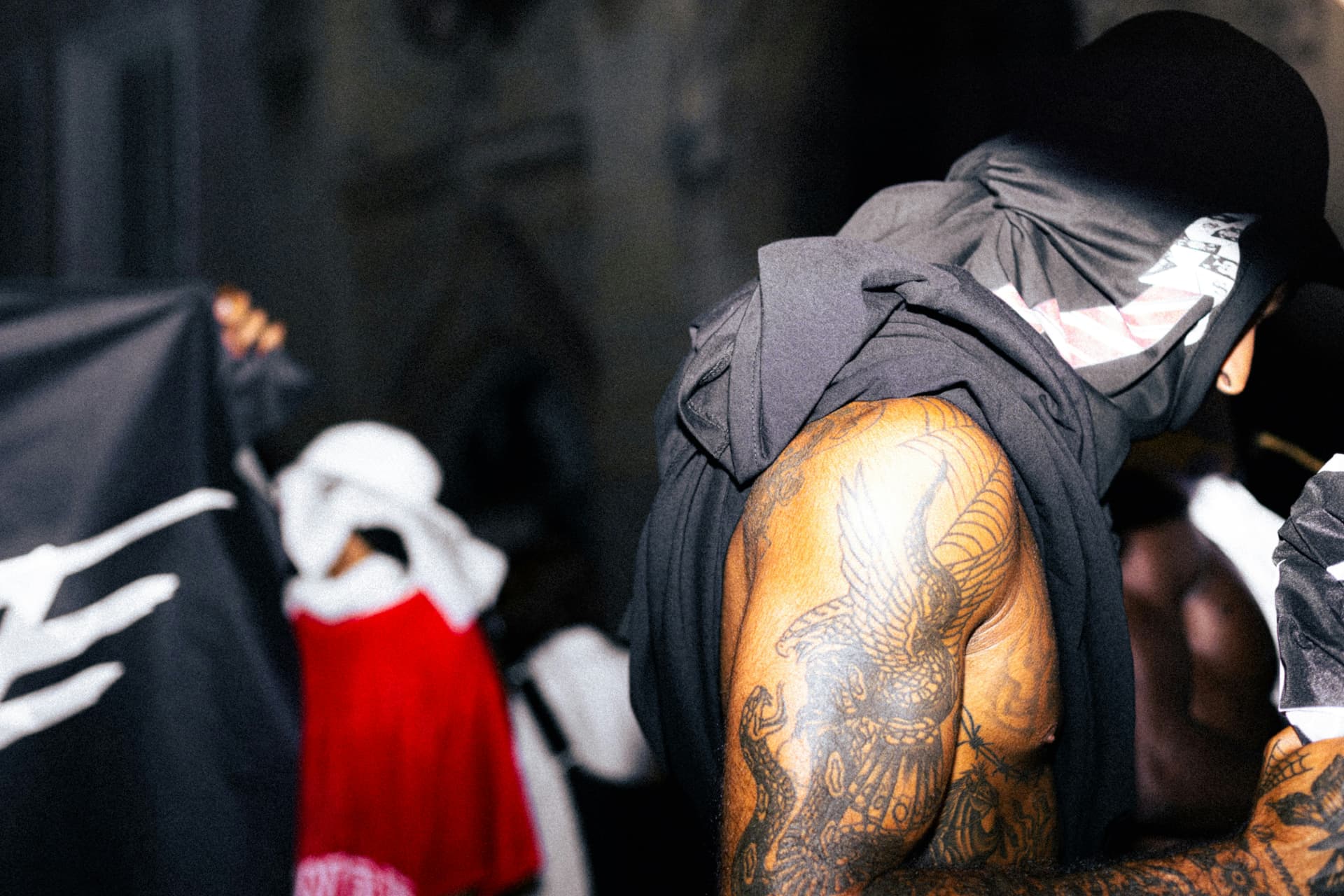
Bluewater, one of Britain's largest shopping centers, banned visitors from entering while wearing hoodies. Management argued that customers should feel safe and that security cameras needed to see people's faces. The decision became national news. Supporters called it common sense; critics argued that it treated thousands of young people as potential criminals before they had done anything wrong.
For perhaps the first time, it wasn't the people wearing hoodies who seemed to be on trial.
It was the garment itself.
The ban inspired similar restrictions in schools, shopping centres, and public spaces across Britain. In many places, the hoodie quietly became shorthand for trouble.
Three years later, the conversation turned even darker.
In 2008, sixteen-year-old Ben Kinsella was murdered in London. The tragedy reignited public debate about youth violence, gangs, and urban crime. Once again, newspapers and television reports illustrated the discussion with images of teenagers wearing hoodies.
The association became almost automatic.
Crime. Violence. Hood.
The logic was remarkably thin, but emotionally persuasive. A hood concealed a face. A concealed face suggested danger. Before long, suspicion had shifted from the individual to the garment itself.
Looking back, the debate feels strangely disproportionate.
No one proposed banning kitchen knives. No one suggested outlawing winter hats or scarves. Nobody questioned baseball caps.
Yet people seriously debated banning hoodies.
That may have been the moment the hoodie became something larger than clothing.
It had become a cultural argument.
While much of the public associated the hoodie with delinquency, fashion was beginning to see something entirely different. The same garment that symbolized disorder to many parents was quietly becoming the defining silhouette of a new generation.
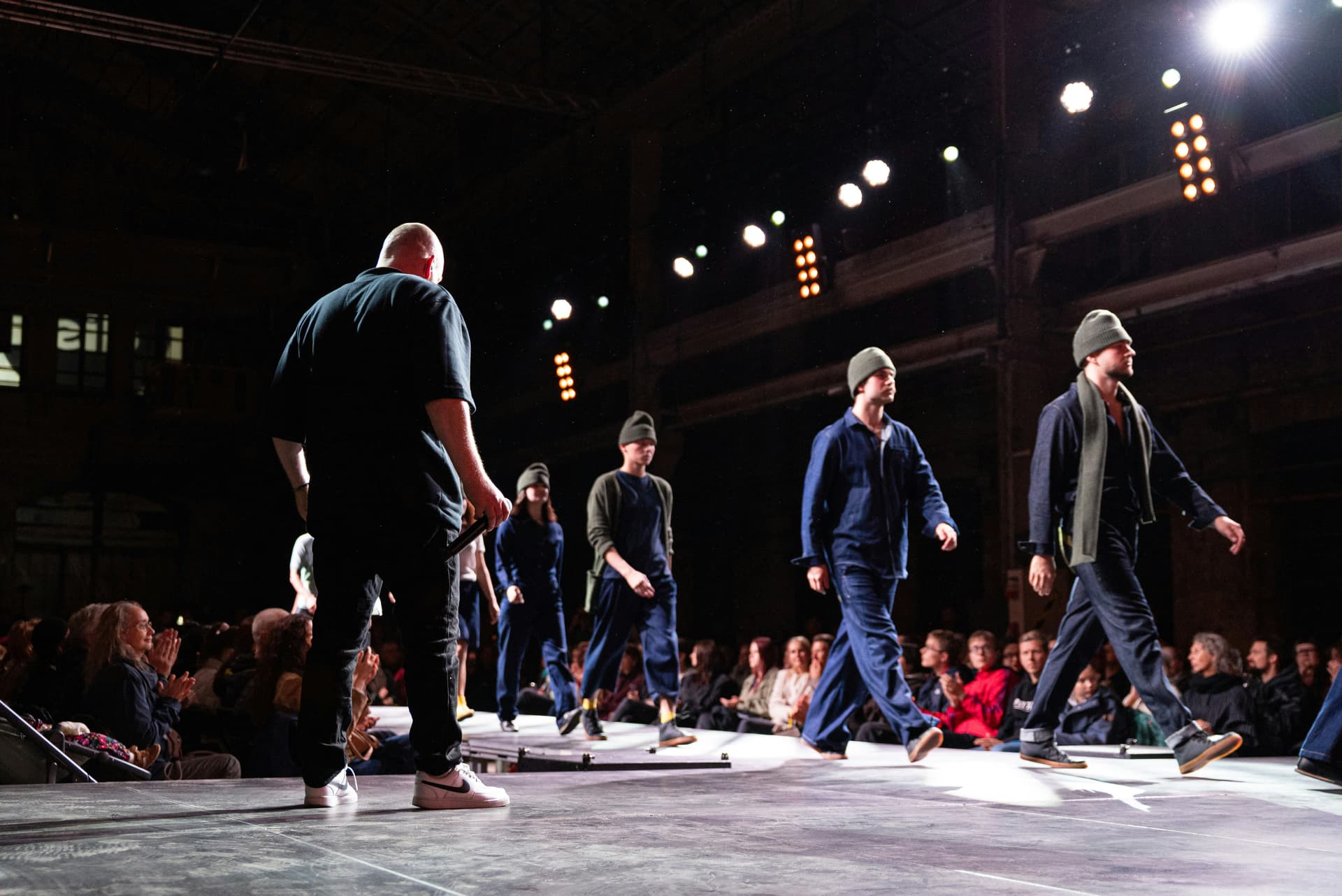
Sportswear brands had already made hoodies part of everyday wardrobes. Hip-hop culture transformed them into symbols of authenticity rather than utility. Skateboarding added another layer of meaning. Early streetwear labels such as Stüssy, Supreme, and BAPE understood something luxury fashion still dismissed: people wanted clothes that reflected the culture they actually lived in, not the traditions they were expected to inherit.
Luxury houses watched from a distance.
For a while.
Then they crossed the street. From the outside, that looked like cultural confidence. From the inside of a brand, luxury often remains the storefront over ordinary operational work.
Norma Kamali was among the first major designers to bring hooded sweatshirts onto the runway. Alexander Wang gave them downtown sophistication. Vetements embraced their oversized proportions without apology. Balenciaga turned them into objects of luxury, sometimes selling garments inspired by workwear for prices that would have astonished the warehouse workers who first wore them.
The final barrier collapsed in 2017.
When Louis Vuitton collaborated with Supreme, it wasn't simply another fashion partnership.
It was a public acknowledgment that the street had won—and still needed the closed rooms of Fashion Week to make that acknowledgment count.
For decades, luxury fashion had largely dictated what the rest of the world would eventually wear. Now the direction of influence had reversed. Luxury was borrowing legitimacy from the street rather than the other way around.
The hoodie no longer belonged to warehouse workers.
It no longer belonged to skaters.
It no longer belonged to graffiti writers.
It belonged to everyone.
Most fashion revolutions begin in Paris or Milan.
This one didn't.
The hoodie never waited for permission from luxury fashion. It moved through warehouses, college campuses, boxing gyms, skate parks, subway tunnels, and recording studios long before it reached a runway. By the time designers embraced it, the revolution was already over. Fashion wasn't leading—it was catching up. At the opposite extreme, couture still extracts beauty through pressure that moves downward rather than through cultural drift alone.
Over the following decades, the hoodie accomplished something few garments ever do.
It replaced another uniform.
For most of the twentieth century, authority had a dress code. A tailored suit wasn't simply fashionable; it was a visual declaration of credibility, discipline, and success. To be taken seriously, you were expected to look the part.
That expectation gradually faded.
The companies that came to define the twenty-first century weren't built inside marble headquarters or oak-panelled boardrooms. They emerged from garages, shared apartments, university dormitories, and anonymous office parks in Silicon Valley. Their founders rejected not only established business models but also the uniform that had long accompanied corporate authority.
The hoodie became their new uniform.
It was practical, informal, and almost aggressively ordinary. Wearing one suggested that ideas mattered more than appearances—or at least that appearance no longer had to resemble the corporate world of the previous century.
Its symbolism soon extended far beyond technology.
Today, it feels equally at home in the headquarters of a global technology company, on a university campus, at a music festival, or inside a luxury boutique. High-fashion houses continue to reinterpret it every season, while fast-fashion retailers produce millions of versions each year. Somewhere between exclusivity and mass production, the hoodie stopped belonging to any single tribe.
It became cultural infrastructure.
The irony is difficult to miss.
The garment that once made people appear suspicious eventually became the uniform of those building the digital economy. The garment that once represented rebellion is now sold by the world's most prestigious fashion houses. The garment designed to keep warehouse workers warm became the symbol of an economy where physical labor is increasingly invisible—much like the quiet systems that move inventory without asking for attention.
None of that was planned.
It simply happened.
At the beginning of this story, a young Moroccan man on the banks of the Seine pulled up his hood and disappeared into the crowd.
A few minutes later, two plainclothes police officers stopped him.
They were wearing cheap Nike hoodies.
A century ago, clothing revealed where a person belonged before they ever spoke. The suit, the uniform, the overalls—each carried its own unmistakable message.
The hoodie blurred those distinctions.
Perhaps that explains why it has outlived every prediction made about it. Every generation believed it understood what the garment represented. Every generation eventually discovered that it meant something else.
Few garments have travelled so far.
Fewer still have changed what power looks like.